Journal
September 8, 2026
Conferences as a research venue
💡 Note: This post was originally published in UX Collective in 2016. Since then, research at conferences and user groups has become a regular part of my research toolkit.
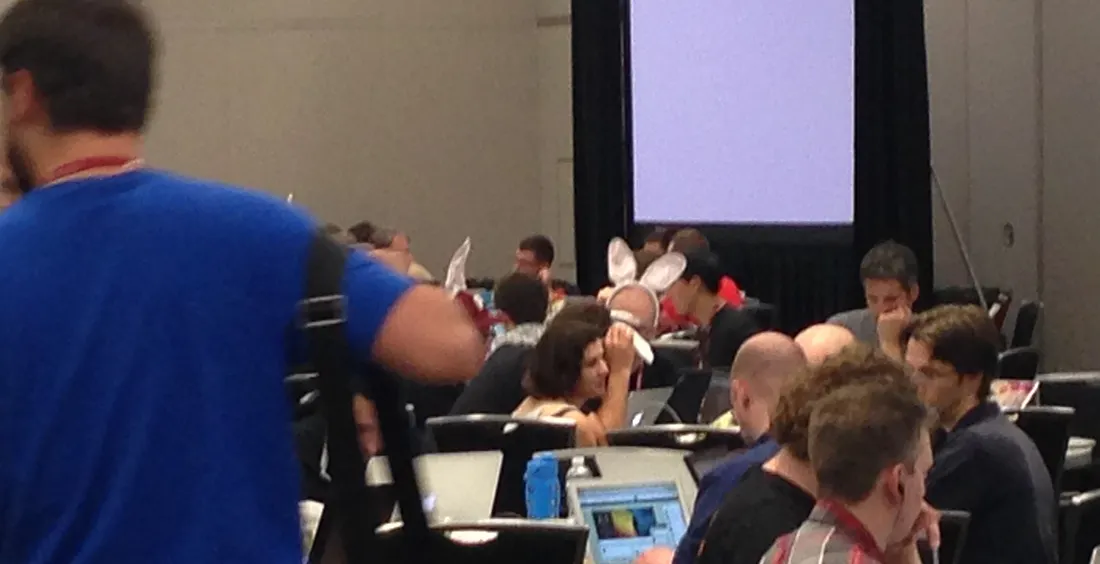
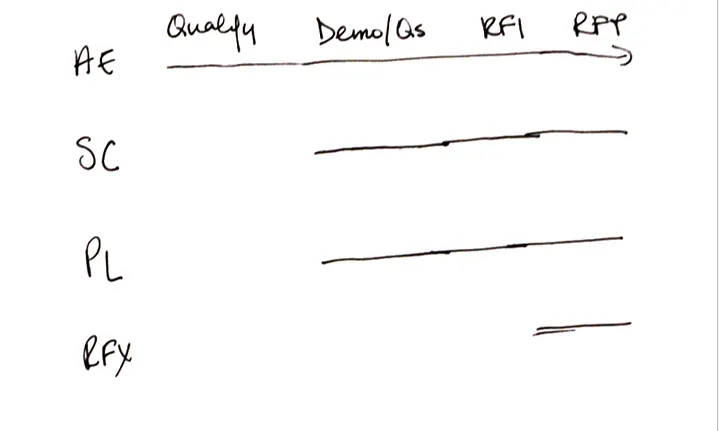
Research at conferences can be a terrific source of information about the people who use your products. At a conference, you get access to many different types of people involved in the behavior you want to learn about, including some types of people you may have known nothing about if you were doing a study with a standard recruit. In my own work, I’ve been able to use conferences to learn how Drupal contributors get into the community, start contributing, and how they organize their work; I also used our annual sales conference to learn how the sales process works within the company I work for.
While conferences can be extremely productive, they can also be overwhelming if you don’t prepare carefully. The rush of people, sessions and networking breaks can make it easy to forget everything you’ve learned from an interview within moments of finishing up, and it’s often difficult to find the right balance between observing/interviewing and capturing what you’ve learned.
Below, I’ve compiled some tips on how to plan research at user/customer conferences. Walking in with a plan that includes a clear set of research goals and plenty of time for reflection and note-taking sets you up for a much more productive experience.
Start with a research goal
Like all research, you want to start by figuring out what you’re there to learn. Maybe there’s a process or workflow you’re trying to understand. Maybe you want to get some usability feedback on a new product you’re developing. Either way, you need to figure out what you don’t know now, and how that fits into what you can learn at the conference.
After you write down your main research goals, take a look at the format of the conference to see how various types of research activities can be fit into your time there. For example:
- Which sessions, if any, will support your research goals?
- When are the scheduled breaks?
- What will the layout of the conference be like? Will there be room for a booth/table, or quiet places to sit down?
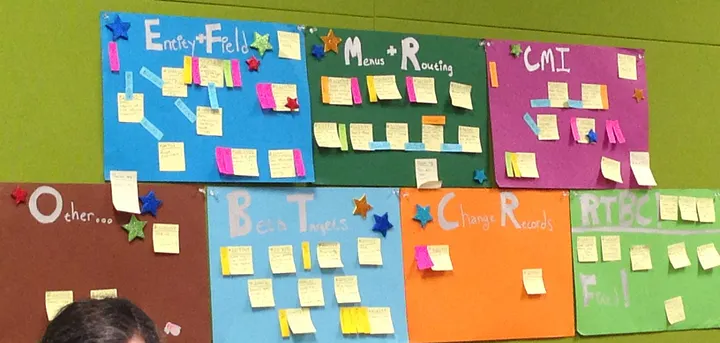
While you’re doing this, you don’t have to limit yourself just to interviews. While researching Drupal contributors, I focused mostly on in-person interviews, along with participant observation at contribution sprints and Drupal Core Conversations, to learn more about how the community made decisions and moved projects forward. At my company’s annual sales conference, I combined in-person interviews with observation at training sessions and conference talks, aimed at getting an understanding of the different ways people learn and participate in the sales process. During both conferences, I balanced the in-person research with online surveys, usability tests, and other feedback-gathering tools.
Write down your protocol, and memorize the key points
Based on your research goals, write down a protocol that will cover the basic points you want to understand. If you’re doing formative research, focus on the behavior you want to study, or any content/information or the tools people use to solve a given problem. Unless you’re actively doing usability testing during the conference (which is totally valid!), try to avoid focusing on the specific product you’re dealing with.
While you want to write this protocol down, don’t bring it with you. Review it a few times before you head out onto the conference floor, and make sure you’ve got the key points you want to ask about. During the interview, you’ll use these key points to draw the participant into the conversation, and let things flow as naturally as possible. Having your protocol memorized also helps during those casual conversations at dinner or during networking events; while you aren’t formally interviewing someone, you can start asking questions from your protocol and use Evernote to quickly jot down your answers once the conversation is over.
Record, Record, Record
The first time I did research at a conference, I forgot to bring any kind of recording equipment. Bouncing from interview to sessions to interview, I found myself forgetting what I had just heard almost immediately after I heard it. Thankfully, the next time I was prepared with a recording app on my iPhone (Highlight by Cohdoo, which has been tragically discontinued), which gave me something to turn back to in the case I couldn’t remember the conversation after the fact.
Provide incentive whenever possible
People at conferences are busy; while 20 minutes of their time might not seem like a big deal, it can mean giving up networking opportunities, forgoing a snack break or showing up late to a session. Try to have some Amazon gift cards handy to thank people for giving their time to you.
Bring a colleague to recruit participants
If you aren’t bringing a member of the team, find a sponsor who knows everyone and is comfortable funneling people towards you. Treat this person well, and have their phone number on hand to coordinate interview participants during breaks. If you’re unable to find a research sponsor, think about snowball recruiting, where one participant recommends another, and so forth. If you are fortunate enough to have a team and/or a booth, have one coworker run interference and recruit people for you.
Leave the laptop in your room
Laptops are murder when you’re running around a conference doing research. For one thing, they’re heavy, and you’re going to be walking a LOT. For another, they’re hard to maneuver when you’re trying to have a conversation in a noisy environment.
During one conference, I used a combination of Highlight (previously mentioned), Evernote, and my Rocketbook Wave notebook to record interviews and take notes. Using Evernote on my iPhone was useful during situations where it was either too loud to record, or I was having casual conversations that turned into an impromptu interview.
Aggressively defend your alone time
It’s hard to understate how overwhelming research at conferences can be. Essentially you’re pulling people away from an intense, people-filled environment All. The. Time. The nature of conferences makes it such that, unless you have a booth, you’re running around constantly. Be sure to make time to go back to the room to reflect and write notes; you can also set aside time after interviews to write down key points. Don’t be afraid to take a quick nap while you’re in the room, as well; some of the most interesting information can be gleaned during evening events, so you’ll need your energy.
Planned carefully, user group conferences can yield invaluable information about the workflow and needs of your product’s users. When you’re an internal consultant, it also lets users know that you care about their needs, which increases loyalty to your products. Have fun, take care of yourself, and learn something new!