Journal
September 1, 2026
The persona character sheet
Done well, user personas can foster empathy with your users and help focus design efforts. That said, personas can too often create more problems then they solve. Too often, they end up as a stand-in for talking to actual people. With teams starting to experiment with LLM-based "personas," this problem is set to get even worse.
I'll never forget the time that I worked on a set of personas for a developer network. During our review, the team honed in directly on the names and images I'd chosen. One leader pointed out that none of the personas looked like they were from India (where most of the company's developers lived). It was an important lesson in both representation and storytelling.
One reason personas can be controversial is because the stakeholders and teams meant to be using the personas don't have a hand in creating them. An external research team does interviews, maybe surveys, then hands off the personas once research is done. When the team has no skin in the game, it's easy to dismiss personas as a purely academic exercise.
In comes the persona character sheet. As with any good role-playing game, the character sheet helps to frame the main characteristics, motivations and intentions of your personas, in a way that's meaningful to the rest of the team. As my husband (a longtime Dungeons and Dragons player) says, the character sheet "gives you all the information you need to know to act that character out… and tells the DM how they should treat your character."
💡 The rest of this post outlines a workshop I ran back in 2016, at a previous company. When I moved to athenahealth in 2018, I did the same workshop for our Collector UX organization with similar results.
The character sheet workshop
During a rebranding project for the Pega Discovery Network, I worked with the stakeholder and design teams to conduct a persona character sheet workshop. The result was a set of 4 personas that the team fully bought into, which were then validated with survey research. The survey research ended up netting a 5th persona, which we hadn't accounted for in the initial workshop. Here's how we did it.
Step 1. the attributes
To effectively create a character sheet, you need to start with a set of realistic information to work with. This information should come from user and stakeholder research.
We started by creating an Excel spreadsheet with columns for:
- Mindsets (e.g. long-term vs. short-term focused, dives in vs. research before starting, etc.)
- Intentions (things someone uses the product to do)
- Demographics (job role, location, etc.)
- Relationship to/familiarity with the company
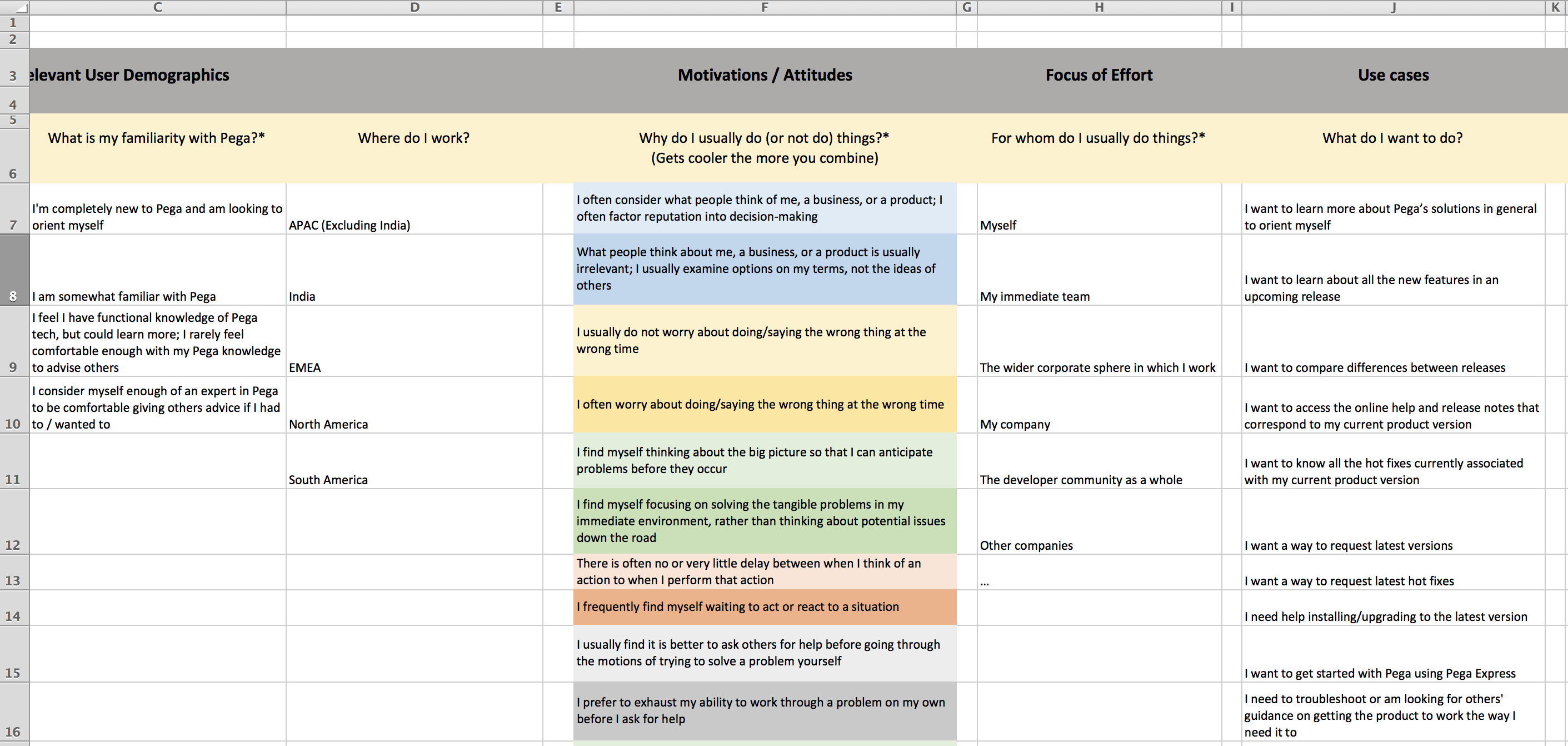
An Excel spreadsheet captured the main intentions, mindsets and demographics of our personas.
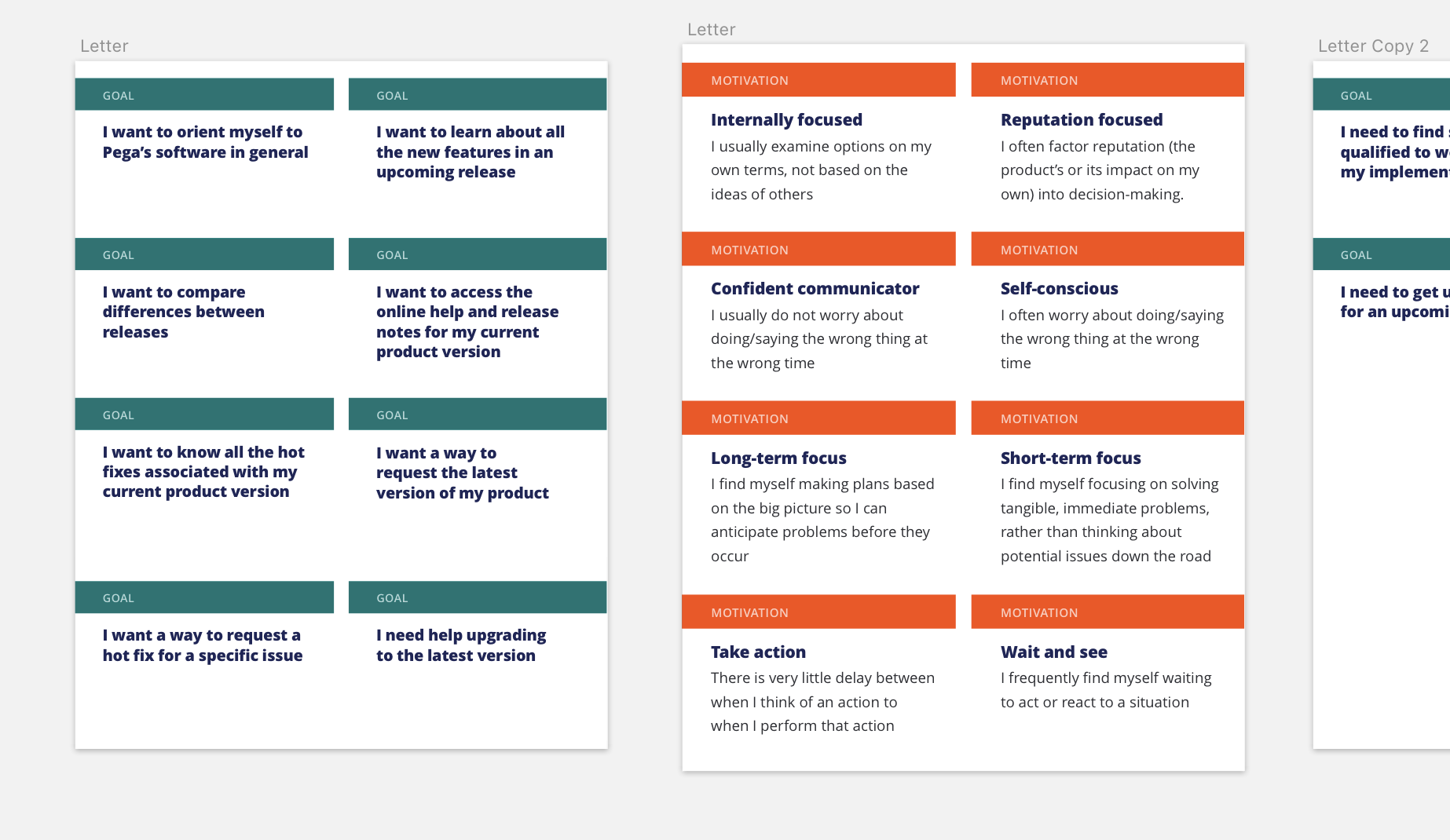
After working with stakeholders independently to fill in the columns, the items in the spreadsheet were turned into printed cards for people to use during the workshop.
Step 2. the workshop
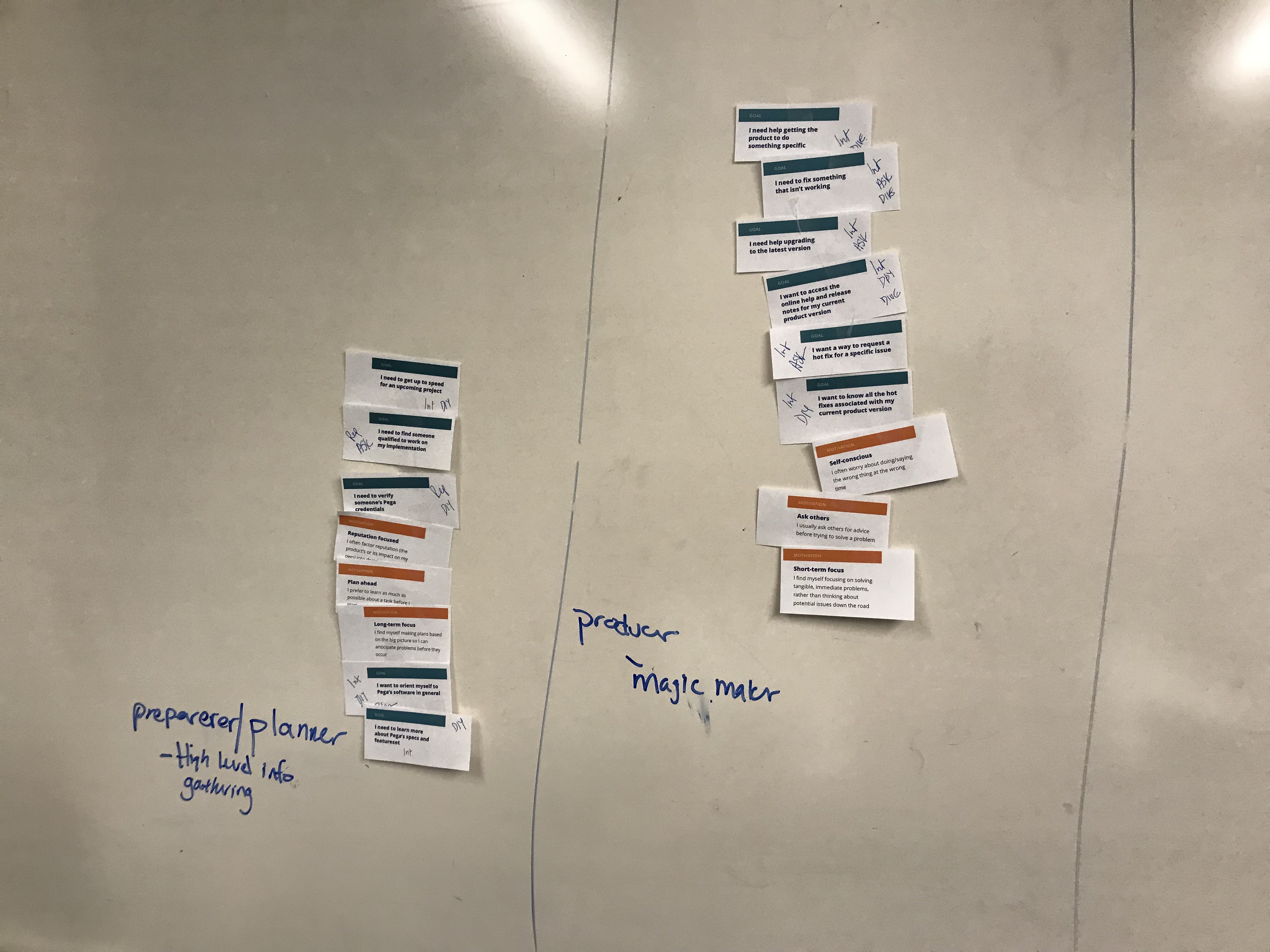
To conduct the workshop, we needed dry erase markers, a big whiteboard, Scotch tape and a willing volunteer. Sharpies and extra paper were available for attributes we missed.
We mapped a set of themes out on the whiteboard and began to map our user intention cards against each theme. While debate was allowed, the participants were encouraged to move quickly, not spending too much time on any one card. Once intention cards were mapped, we looked at how our mindsets might map to each intention. For example, someone trying to troubleshoot a problem with the software might be more short-term focused, while someone looking to share their knowledge with the larger community might be longer-term focused.
As we finished mapping mindsets to intention, we saw clear buckets of behavior to align on. At the end of the workshop, we had four extremely promising personas to validate.
Step 3. survey validation
We used a tool called Hotjar, to conduct an intercept survey on both the Pega Discovery Network and Pega Academy (our training delivery platform). The survey focused on key intentions, and asked users to choose their intention for visiting the site, along with a series of mindset-focused options.
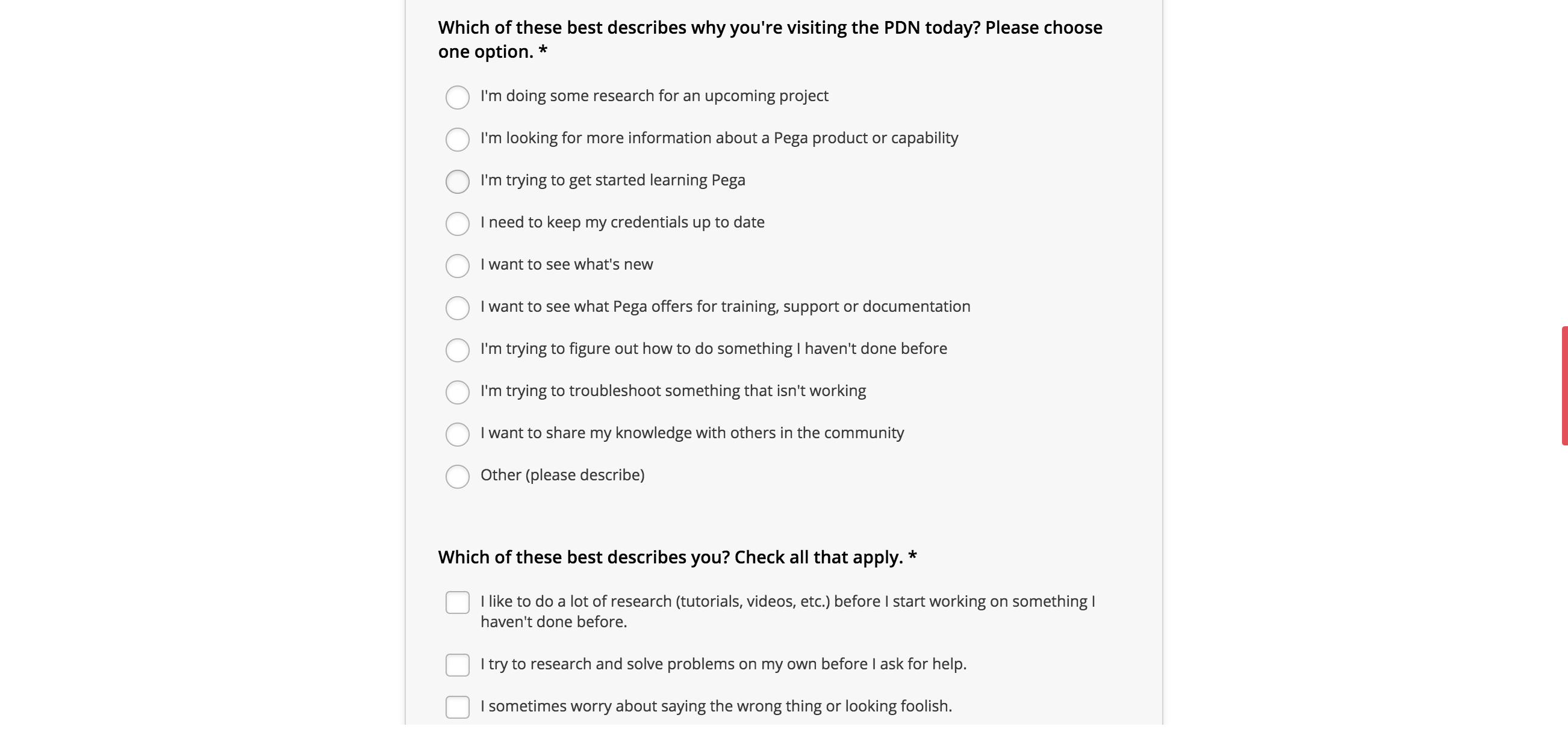
After analyzing the data, we were able to see where we had to adjust the original personas. We also uncovered a 5th persona, the Student, which we hadn't accounted for in the workshop.
Finishing up
The result of all this work was a set of personas the project team could fully buy into. Almost immediately, they started referencing them in design briefs and project conversations. Some things we kept in mind moving forward:
- The character sheet is a snapshot in time, not a permanent state. Because the persona sheet focuses on intention and mindset rather than demographics or other identifiers, they are best viewed as a person's state of being in a particular moment. Someone might identify with one persona during today's visit, but identify with a completely different persona the next.
- For buy-in, focus persona names on a brief description, not a name/picture. For our personas, we named them by characteristic, e.g. the Planner, the Expert, etc., and we gave them icons instead of headshots. This helped people avoid obsessing about names or faces and focusing on the behaviors and mindsets.
- Stakeholders from the business side must be present and engaged when doing the mapping exercise. The conversation and visual aids used in the workshop are important to help people become invested in these characters.
If you are considering personas for your team, I encourage you to try this method out.