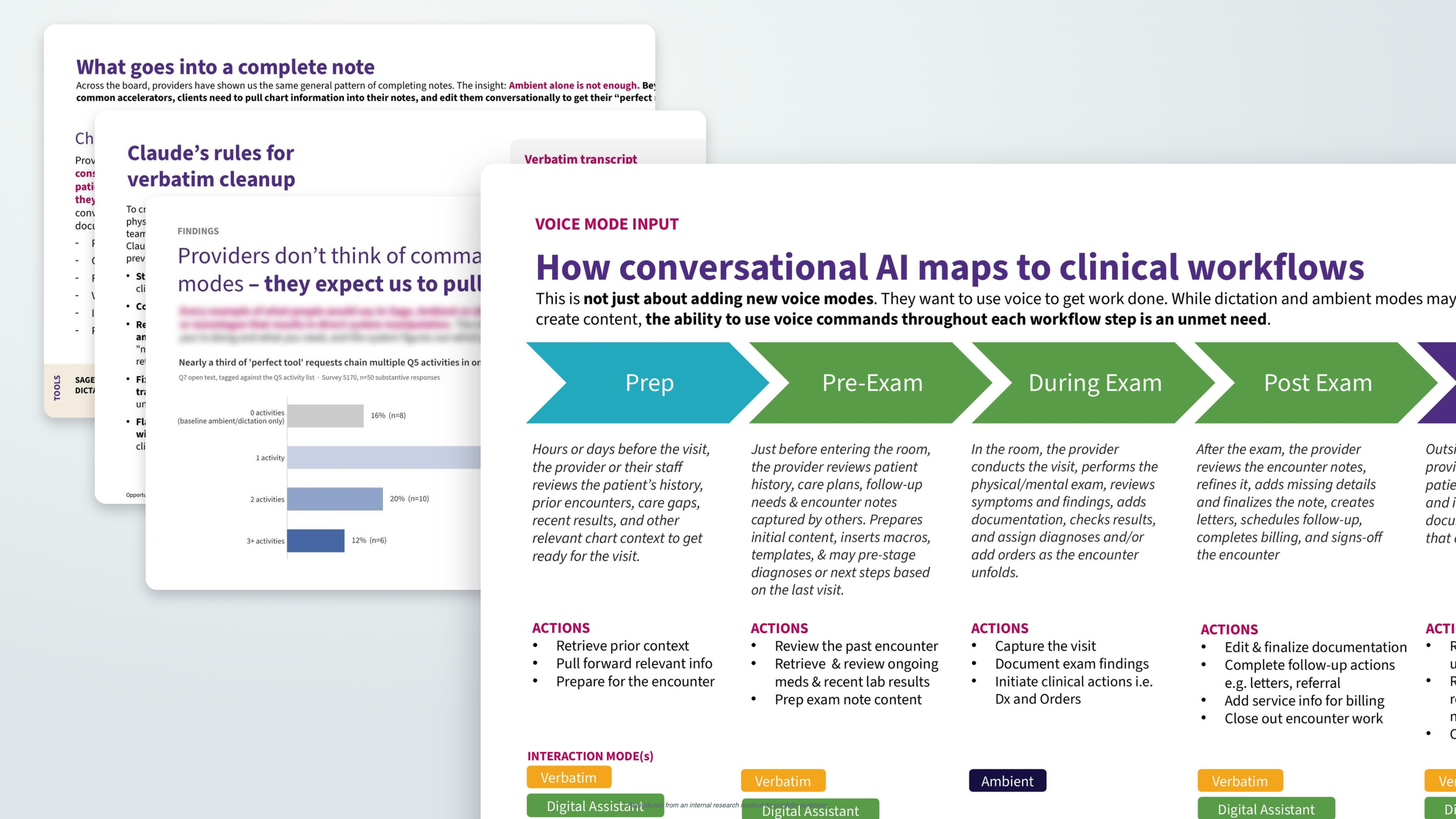
Background research in voice and conversational features
Timeline: Spring 2026
Team: 1 product managers, 1 designer, 2 engineers
Question: What does our current suite of tools look like, how are people using them, and what gaps do they complain about?
Since athenaOne already had a long history of voice-powered features, we had a treasure trove of previous research and Voice of the Customer feedback about the different voice modes people used, including Dictation, Ambient Notes, and a Voice Assistant that was available in the Mobile app. Working with a Principal Designer, we used a combination of an internal GPT stack that queried internal data and our AI-enabled Marvin research repository to provide teams with an overview of each voice mode, and the opportunities we’ve already captured for improving the experience.
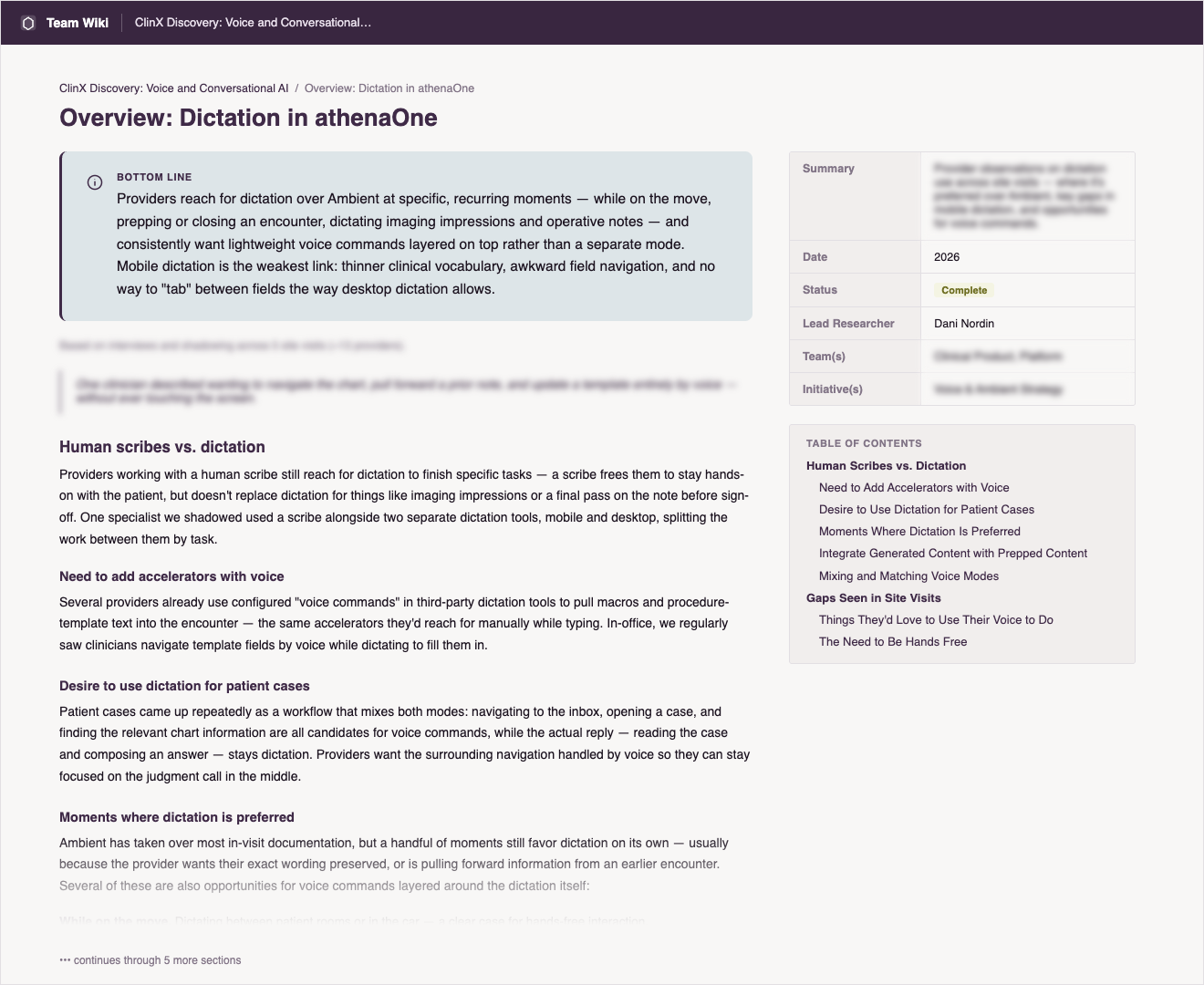
As I had already done a ton of research with this team on Dictation experiences, I focused on Dictation, while I coached my collaborator on how to structure the deep dive on the other modes. This research gave the team a solid sense of current state, as well as a handful of roadmap items they could add to JIRA as we continued the research.
AI-assisted analysis of Sage questions
Timeline: Spring-Summer 2026
Team: Solo
Question: What are people asking our primary conversational experience today? Are there patterns there that we could use to inform Voice commands, or other AI-powered features?
Since voice commands and conversational experiences were top of mind for the team, I worked with the Product Manager for Sage, athenaOne’s AI-powered Chart Assistant to get a download of all the questions asked of it since it was launched. This conversational interface lives within the provider’s Encounter workflow, and lets them query the patient’s chart for things like results, trends, visit notes, and more.
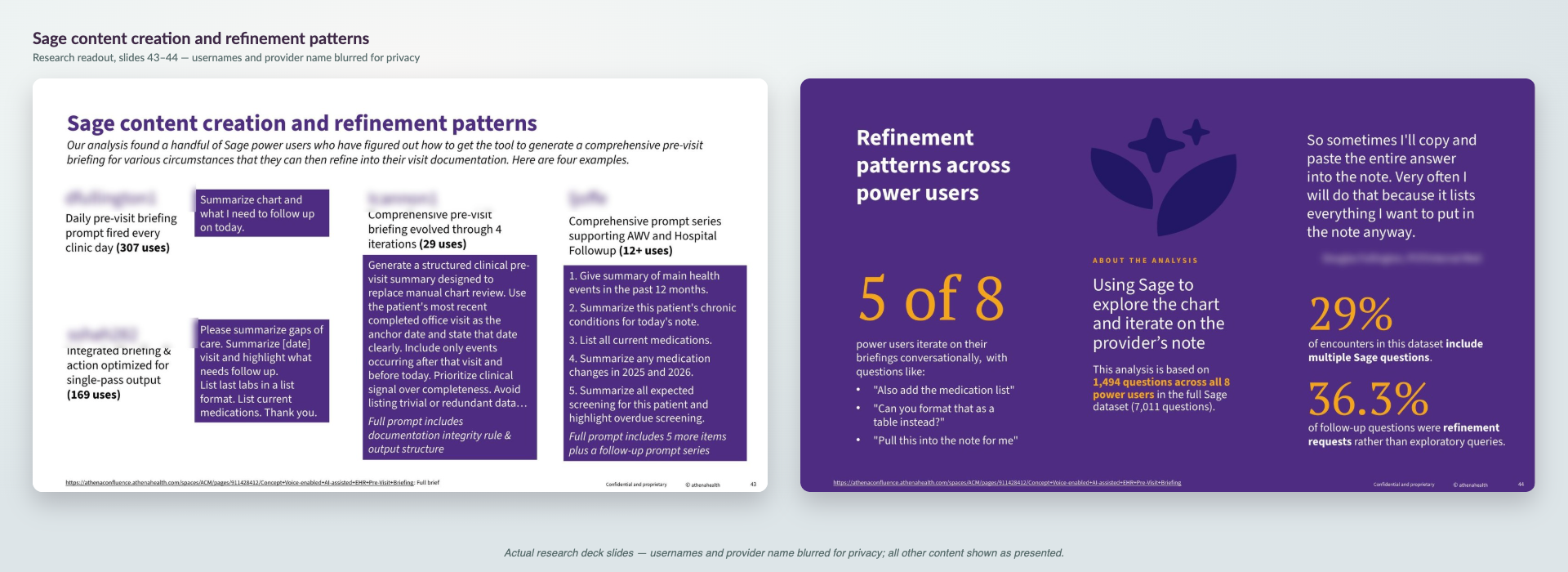
The full download contained over 7,000 questions captured over a period of about 9 months. Using a series of structured Claude prompts, I was able to establish clear patterns in the types of questions providers were asking, and in what combination. This work ended up feeding not only the Voice strategy, but the work of several other teams working on AI-powered features, including the Sage team themselves.
Survey and Interview Research
Timeline: Summer 2026
Team: 1 designer, with collaboration across two other teams
Question: How are providers using voice and conversational features in combination to get their work done today?
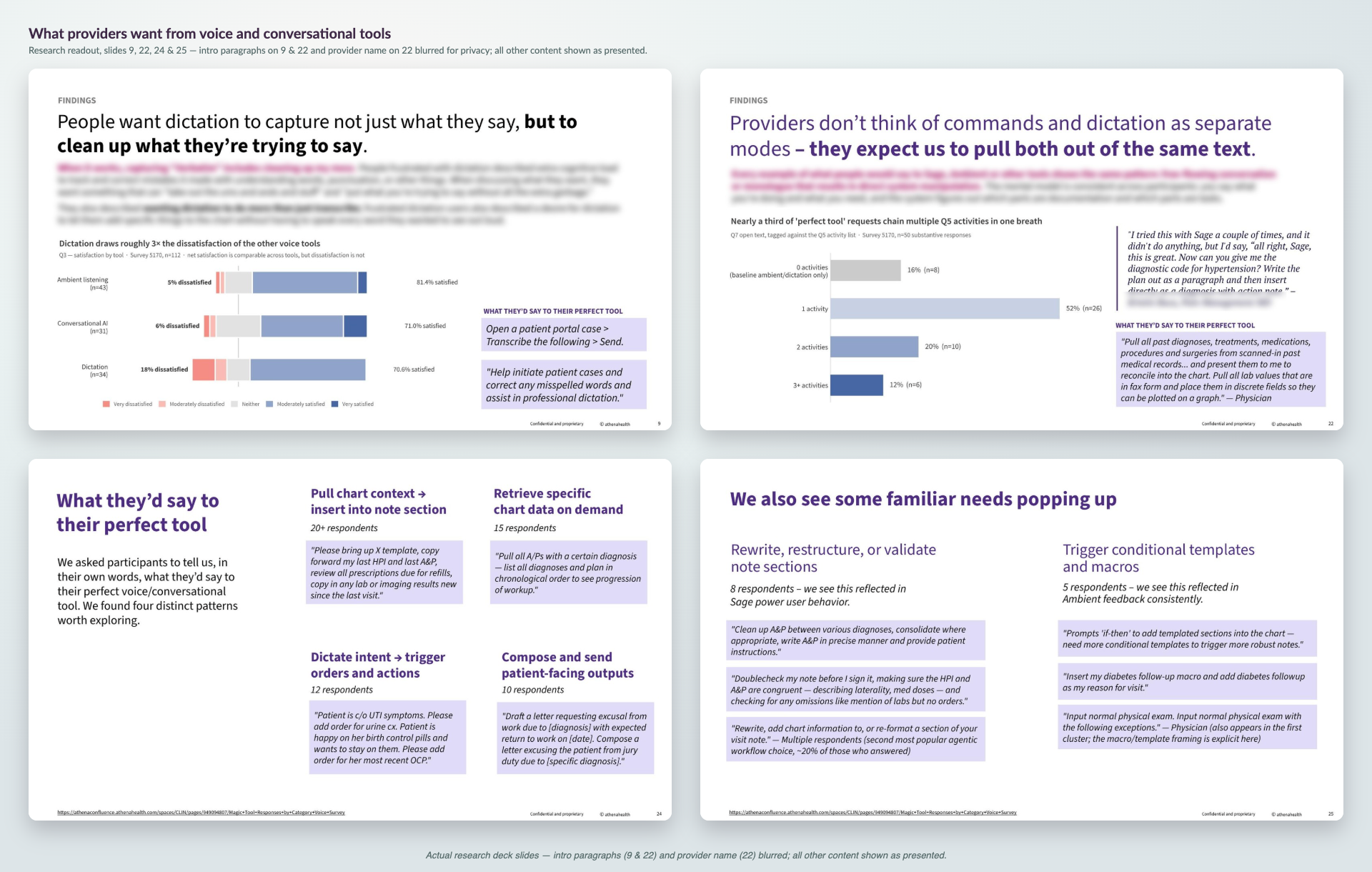
By early summer, the team already had a broad base of findings to start prioritizing against. But we still needed to understand user behavior beyond what they were using our features for. That’s where surveys and interviews were helpful. Working with the principal designer in Mobile, with collaboration from designers working on other encounter-specific AI workflows, we launched a survey focused on what voice and conversational AI tools providers were using in their day to day. At the end of the survey, participants were invited to sign up for an interview slot with myself or another researcher.
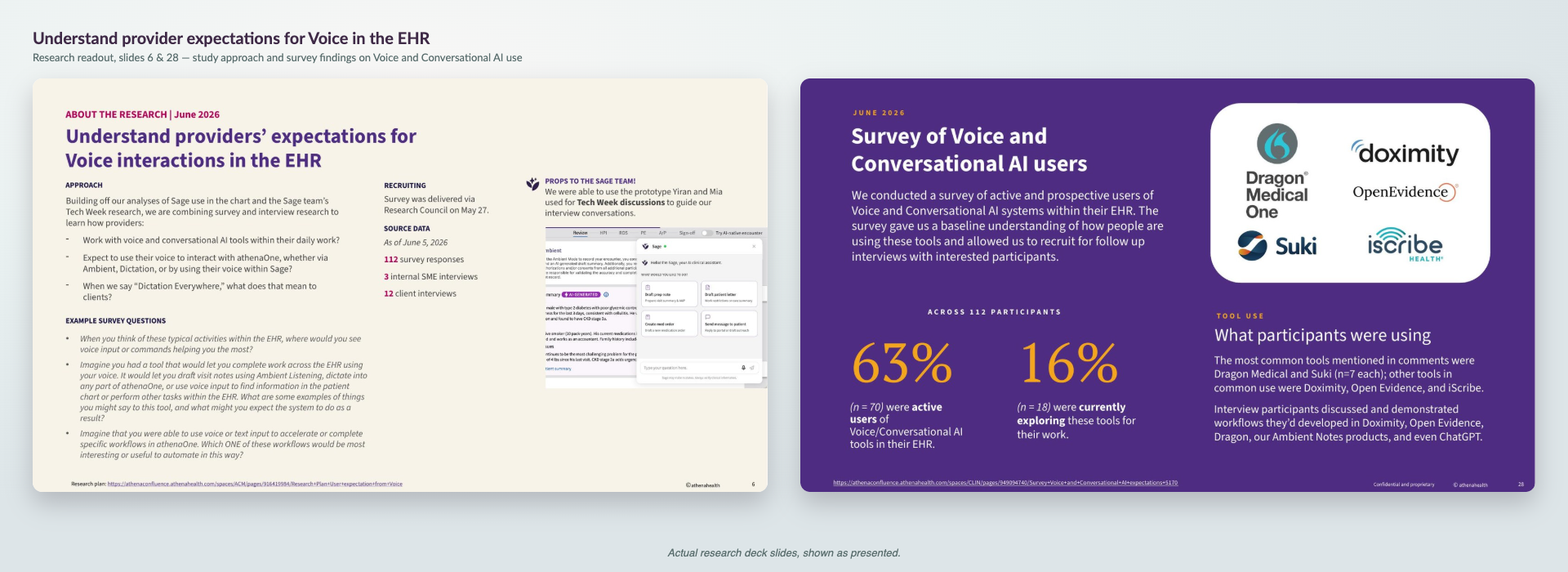
In addition to standard questions like what tools they had tried, their level of satisfaction, etc. we offered them a series of potential AI/Voice opportunities to prioritize, and asked an open-ended question about what they’d say to their perfect tool. This gave us a rich qualitative base to work from as we shaped the strategy.
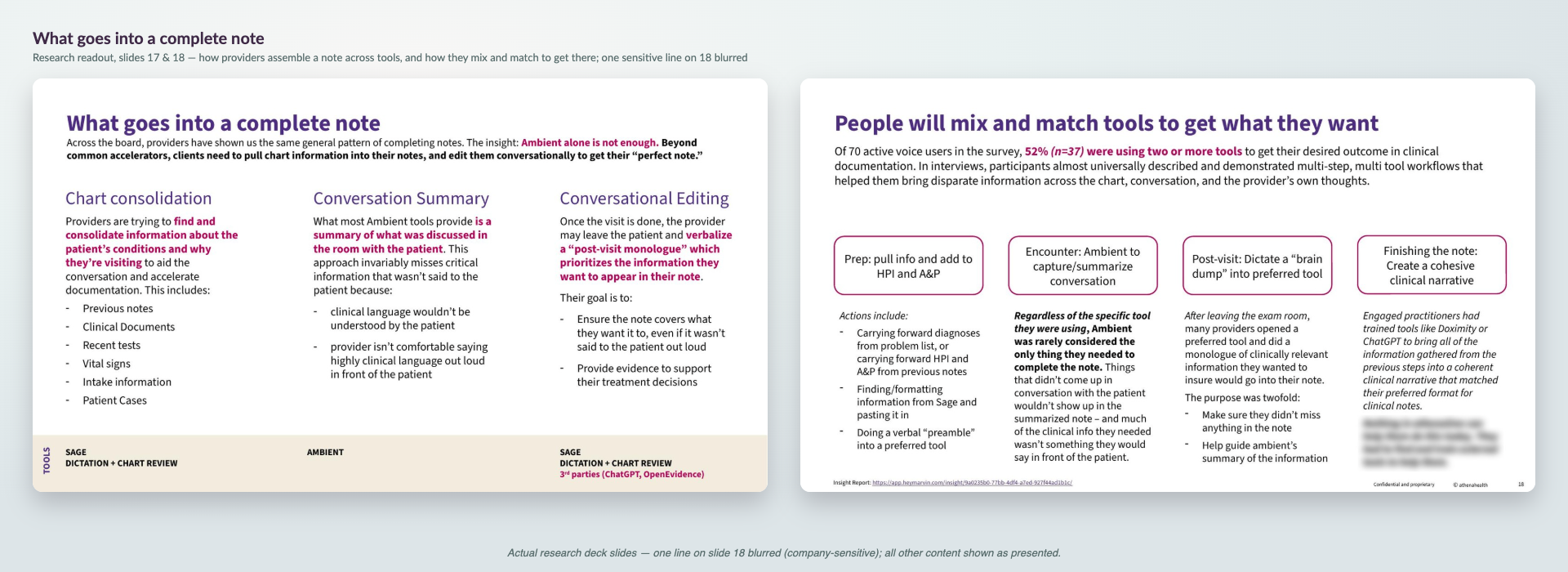
The interviews gave us the opportunity to actually watch how providers mixed and matched different tools to get the right content into their clinical notes. This, along with AI-assisted content analysis of actual clinical notes, led to a deeper understanding of the actual types of content people were including, where they got that content from, and how things ultimately get “stitched together” to create the actual encounter documentation.
Vision and Roadmap exercise
Timeline: Summer 2026
Team: 1 designer and 2 Product Managers with collaboration across two other teams
Question: How do we evolve our Voice and Ambient strategy to incorporate this new insight?
As the interviews wrapped up, we had to put all of this together into a cohesive strategy and roadmap for improving these experiences across athenaOne. I worked with the team to articulate and prioritize the main “big bucket” opportunities — and present them to the leadership team.
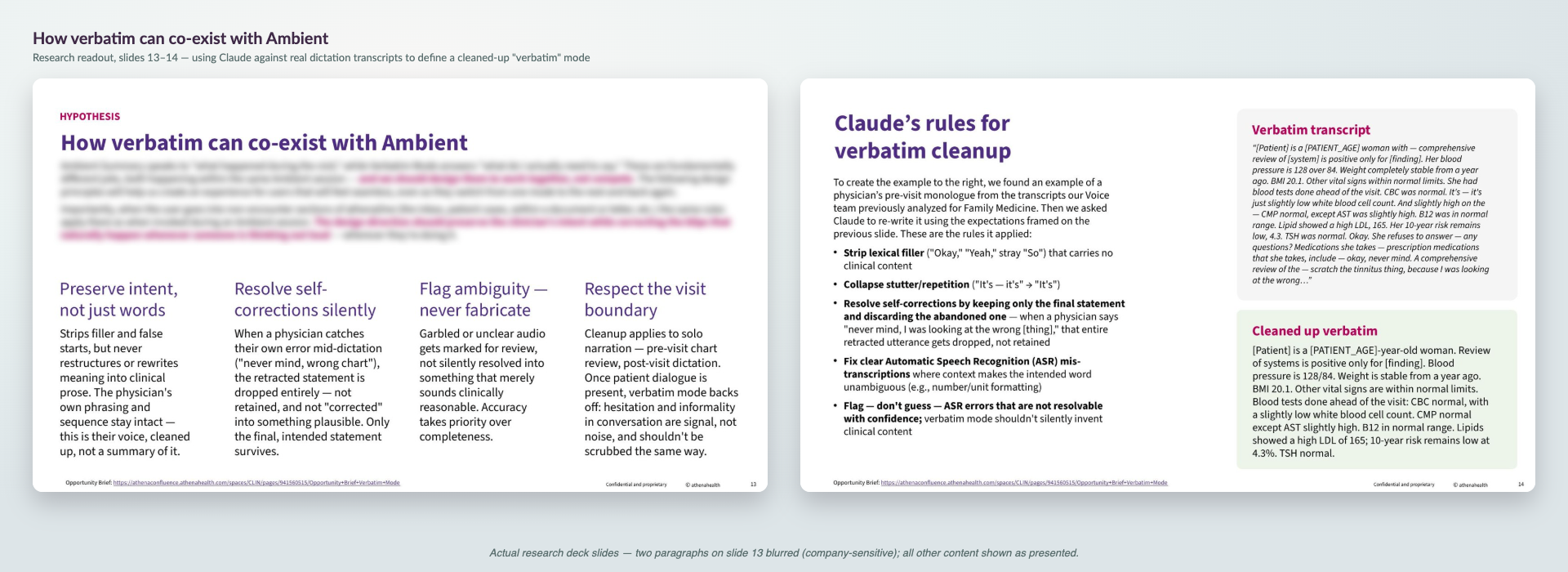
As part of this, I also worked with Claude to identify potential standards for what we ended up calling verbatim mode: an enhanced form of dictation that cleaned up filler words and “thinking out loud” errors. I was able to use Claude against de-identified transcripts from Ambient Notes to identify areas where the user was essentially giving a “preamble” for the note. Then I gave Claude instructions on how I wanted the transcript cleaned up - and had it describe what it did after the fact.
Finally, I worked with my designer colleague to create a vision-forward prototype that would illustrate a North Star workflow. I used the Sage questions and transcript summaries to write the content for the workflow, while my colleague did the actual prototype.
Outcome
The strategy I developed with the team currently informs the Mobile and Voice zone’s 2026-2027 roadmap, as well as the roadmaps of several other teams.